Future IT Trends: What Happens Next!
The tech world never stands still below we look at possible future IT trends over the next five years and how they can change the information technology landscape . These changes could transform and impact every facet of our lives.
Whether it’s the integration of artificial intelligence into everyday applications, the rise of edge computing, breakthroughs in cyber security or the increased importance of sustainability for businesses, the future of IT is set to bring a wave of innovation that we can barely begin to imagine today.
In this article, we’ll dive into the most exciting aspects that are poised to redefine our future, whether you’re a tech enthusiast or a professional looking to stay ahead.
Artificial Intelligence and Machine Learning
One of the most anticipated trends in IT is the continued rise of artificial intelligence (AI) and machine learning (ML). These technologies are no longer confined to theoretical research; they are now driving real-world applications across various industries. In the next five years, AI and ML are expected to become even more integrated into our daily lives.
Your business and Artificial Intelligence (AI)
Artificial Intelligence (AI) is revolutionising the business world, offering innovative solutions that enhance efficiency, productivity, and decision-making. As AI is increasingly automating repetitive and mundane tasks, it allows human workers to focus on more complex and creative endeavours, enhancing the efficiency of your workforce.
How AI is used now
Enhancing IT Operations:
AI-driven operations, or AIOps, are transforming IT departments by automating routine tasks and improving system performance. AI helps IT teams quickly identify and resolve issues.
Revolutionising Marketing and Sales
AI processes vast amounts of customer data to identify trends and personalise campaigns. This allows businesses to better target their audience, predict customer behaviour, and refine their marketing strategies.
Streamlining Customer Service:
Chatbots and virtual assistants provide 24/7 customer support, handling routine inquiries and freeing human agents to tackle more complex issues. This improves customer satisfaction and reduces wait times.
Content Creation:
AI is increasingly used to generate text, images, and other content. These tools aid in brainstorming, drafting, and even coding, making content creation faster and more efficient. Gartner predicts that by 2025, 30% of outbound marketing content will be generated by AI
AI and Cybersecurity
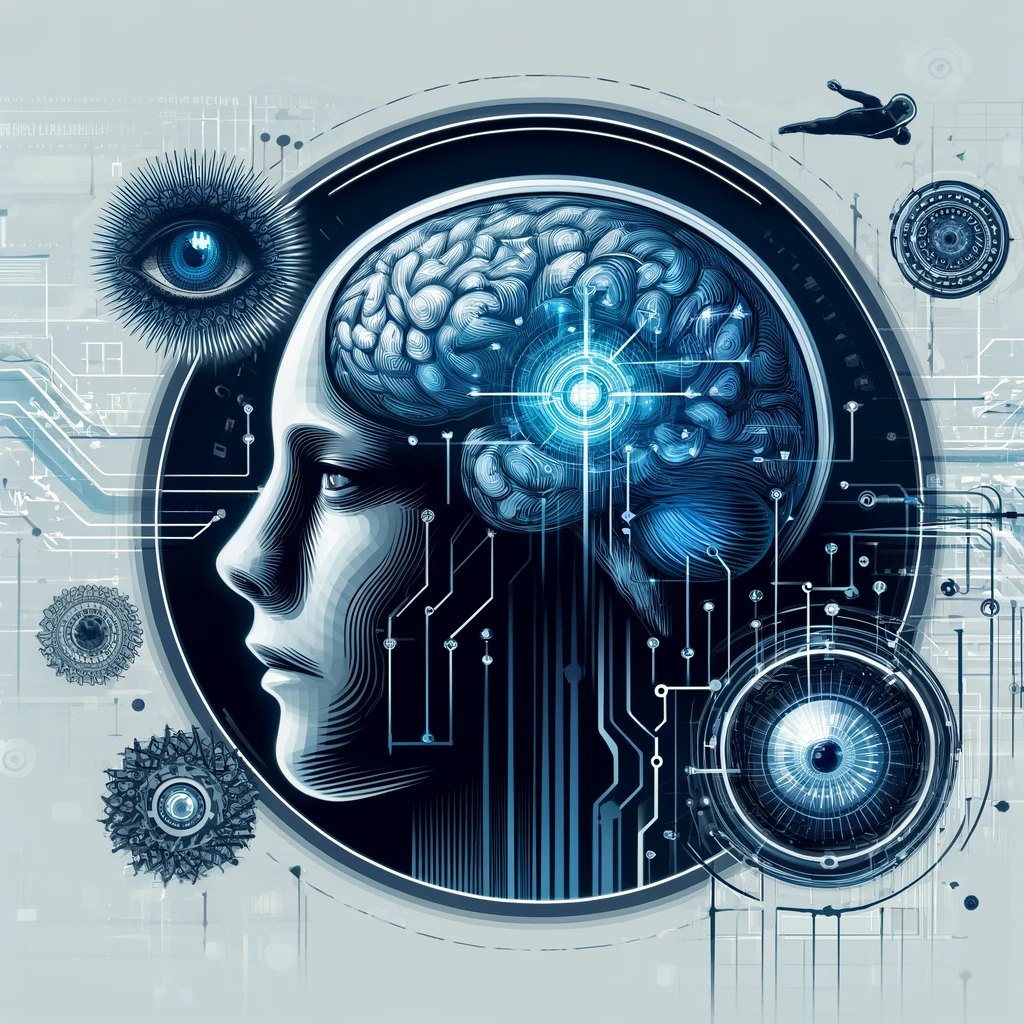
AI will enhance cybersecurity by identifying and responding to threats in real-time. AI-driven security systems will be able to detect unusual patterns and potential vulnerabilities, providing a proactive defence against cyberattacks.
Ethical AI and Bias Reduction
As AI becomes more integrated into society, there will be a stronger focus on developing ethical AI systems. Efforts will be made to reduce bias in AI algorithms, ensuring fairness and transparency in decision-making processes.
AI in Healthcare
AI will play a pivotal role in healthcare, aiding in diagnosis, treatment planning, and personalised medicine. Advanced AI algorithms will help in early detection of diseases, improving patient outcomes and reducing healthcare costs.
Strengthening Cybersecurity
AI enhances cybersecurity by detecting anomalies, preventing fraud, and responding to threats in real-time. Machine learning models analyse vast amounts of data to identify suspicious activities, protecting businesses from cyberattacks and data breaches
Optimizing Supply Chain Management
AI is used in supply chain management to forecast demand, optimise inventory levels, and enhance logistics. Predictive analytics helps businesses anticipate market changes and adjust their supply chains accordingly, reducing costs and improving efficiency
Technology Advancements
As technology advances, so do the threats that target it. Cybersecurity will remain a top priority, with new strategies and technologies emerging to combat increasingly sophisticated cyberattacks.
With AI leading the way you will continue to see an accelerated adoption into other areas, AI will play a crucial role in identifying and responding to cyber threats in real-time, improving overall security posture.
This will couple with the adoption of current standards such as Zero Trust Architecture which organisations will continue to adopt as a default approach, to security where every access request is thoroughly vetted, regardless of its origin.
We will see the advance of quantum computing, which is set to tackle problems that are currently unsolvable with traditional computers.
While practical applications are still in development, the potential for breakthroughs in areas like cryptography (providing enhanced security measures around key areas of security like, protecting sensitive data) and complex system simulations is enormous.
Which could lead to advances in human augmentation and extended reality (XR). Technologies like augmented reality (AR), virtual reality (VR), and mixed reality (MR) are becoming more prevalent, creating immersive experiences that blend the digital and physical worlds. These innovations will revolutionise industries from education to entertainment, making interactions more engaging and effective
5G technology is another game-changer on the horizon. It promises lightning-fast internet speeds and will enable a new wave of applications, from smart cities to advanced mobile experiences. And don’t think the advancements stop there, — research into 6G is already underway, promising even more revolutionary changes
Cloud Computing and Edge Computing
Cloud computing has already revolutionized how businesses operate, offering scalable and cost-effective solutions. However, the next five years will see the rise of edge computing, which brings data processing closer to the source of data generation.
- Hybrid Cloud Solutions: Businesses will adopt hybrid cloud environments, combining public and private clouds to optimise performance, security, and cost.
- Edge Computing Expansion: Edge computing will become more prevalent, reducing latency and bandwidth usage by processing data locally. This will be crucial for applications requiring real-time responses, such as autonomous vehicles and IoT devices.
- Serverless Computing: This model will gain traction, allowing developers to build and run applications without managing servers, thus streamlining development processes.
Internet of Things (IoT)
The Internet of Things (IoT) is expanding rapidly, connecting more devices and generating vast amounts of data. In the next five years, IoT will become even more ubiquitous and integrated into various aspects of life and business.
- Smart Cities: IoT will drive the development of smart cities, where interconnected systems improve urban living through better traffic management, energy efficiency, and public safety.
- Industrial IoT (IIoT): Manufacturing and industrial sectors will leverage IIoT for predictive maintenance, process optimization, and enhanced productivity.
- Wearable Technology: The growth of wearable devices will continue, providing real-time health monitoring and other personalised services.
Sustainability and IT
With the continuing technology BOOM we are in, controlling the effect on our planet and resources should be something that every company strives towards.
Sustainability is becoming an increasingly important focus within the tech industry alone. As we look to the future, IT innovations will play a pivotal role in promoting environmental sustainability and reducing the carbon footprint of various technologies, thus allowing other companies to adopt similar processes, this will drive down the carbon footprint on our environment.
You will see the evolution of more Green Data Centres as efforts will be made to build more energy-efficient data centres, utilising renewable energy sources and advanced cooling technologies to reduce energy consumption.
The development of sustainable hardware, including biodegradable components and materials, will minimise e-waste and promote recycling.
Coupled with IoT and AI you will see the creation of smart grids that optimise energy distribution and usage, leading to reduced waste and improved efficiency.
Why All This Matters
Understanding the future trends in IT is crucial for businesses, professionals, and tech enthusiasts alike.
These trends will not only drive technological advancements but also influence economic growth, job creation, and societal development. By staying ahead of these trends, organisations can be better prepared for the future, adopt new technologies early, and maintain a competitive edge.
Moreover, these innovations promise to address some of the most pressing global challenges, from enhancing healthcare and education to improving sustainability and reducing our environmental footprint.
The next five years for IT will be defined by continuous learning, enhanced connectivity, advanced AI, and a strong focus on sustainability and cybersecurity.
Whether your waiting on crypto and blockchain, or for AI to start writing its own code, the future is bright and the possibilities are endless!